Getting a UK visa is the ultimate dream for many Pakistanis. Whether you want to study in London or work in Manchester, the opportunity is huge. But unfortunately, where there is a dream, there is a scammer waiting to exploit it.
In 2026, UK immigration rules have become stricter. The “Care Worker” route has tightened, and student visa checks are tougher. Scammers are using this confusion to panic people into paying lakhs of rupees for fake documents.
Table of Contents
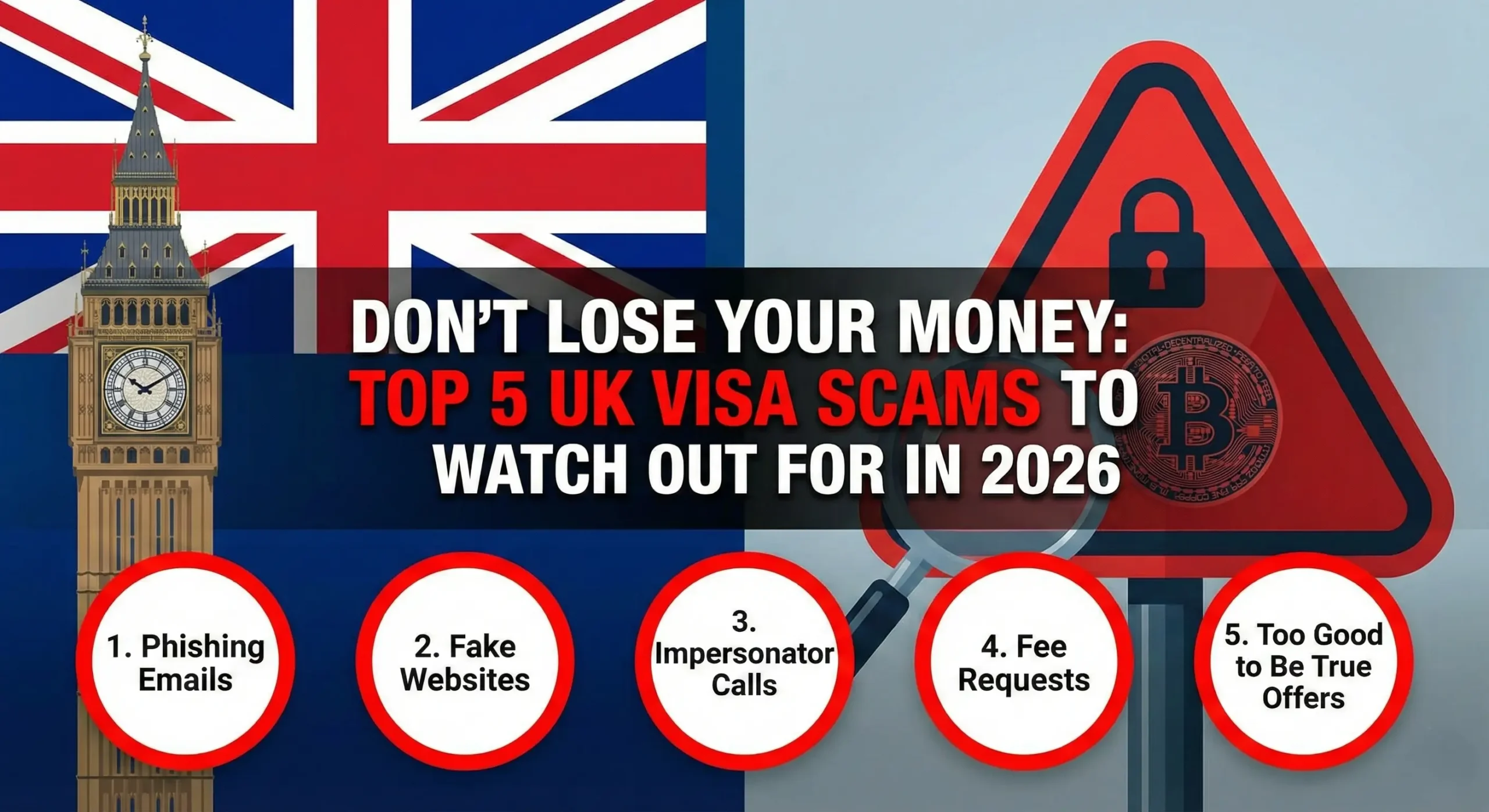
In this guide, I will expose the Top 5 UK Visa Scams happening right now and show you exactly how to protect your hard-earned money.
1. The “Fake Certificate of Sponsorship” (CoS) Scam
This is the most common and dangerous scam in Pakistan right now. You see an ad on Facebook or WhatsApp: “Urgent Care Worker Jobs in UK – No Interview, Guaranteed Visa.”
- How it works: The agent asks for a huge amount (Rs. 20-30 Lakhs) to give you a “Certificate of Sponsorship” (CoS). They claim this document guarantees your job.
- The Reality: The CoS is often fake, or issued by a “shell company” (a company that exists only on paper) that the UK Home Office is already investigating.
- The Consequence: Your visa gets rejected, you get a 10-year ban for using false documents, and the agent disappears with your money.
- Real Advice:
- Never pay for a job offer. In the UK, it is illegal for an employer to charge you for a job.
- Check the Sponsor List: Always verify if the company is a licensed sponsor on the official UK Government website.
2. The “Guaranteed Visa” Agent
Agents love to use the word “Guaranteed.” They will tell you, “I have an inside setting in the High Commission” or “I know an officer in the Home Office.”
- How it works: They ask for a large upfront fee or a “processing charge” and promise a 100% success rate, even if your bank statement or English skills are weak.
- The Reality: Nobody can guarantee a UK visa except the UK Visas and Immigration (UKVI) officer deciding your case. Even the best lawyer in London cannot promise a 100% result.
- Real Advice: If someone says “100% Guarantee,” run away. Legitimate consultants will assess your profile honestly and tell you your weak points.
3. The “Student Tuition Fee” Discount Scam
This targets students who have already secured admission.
- How it works: A “third party” or agent contacts you, claiming they can pay your university tuition fees at a discounted rate (e.g., pay them £5,000 and they will credit £7,000 to the university). They often claim to use “special exchange rates.”
- The Reality: They pay the university using stolen credit cards. The university receives the money initially, but when the fraud is reported, the bank reverses the payment.
- The Consequence: The university cancels your enrollment for non-payment, and reports you to the Home Office. You lose your money and your visa.
- Real Advice: Always pay your fees directly to the university via their official student portal or bank transfer. Never use a “money transfer agent” for tuition fees.
4. The “Fake ETA” Website Scam
The UK is rolling out the Electronic Travel Authorisation (ETA) system for visitors. Scammers have created copycat websites that look exactly like the official UK government site.
- How it works: You search for “UK ETA application” on Google. You click on a link that looks official. You fill out the form and pay $80 or $100.
- The Reality: The real ETA costs only £10 (approx. PKR 3,500). You just paid 10 times more to a third party who might not even submit your application, or worse, steal your passport data.
- Real Advice: Only use the official government domain which ends in .gov.uk. If the website ends in
.com,.org, or.net, it is not the official government site.
5. The Phishing Email / Call from “Home Office”
You receive a call or email claiming to be from the “UK Home Office” or “Department of Home Affairs.”
- How it works: They tell you there is a “problem” with your immigration status or visa application. They threaten you with immediate deportation or visa cancellation unless you pay a “fine” or “verification fee” instantly via bank transfer or crypto.
- The Reality: The UK Home Office never calls you to demand money over the phone. They never ask for fines to be paid via WhatsApp links or personal bank accounts.
- Real Advice: Hang up immediately. Do not share your personal details. Check your application status only through the official portal.
Comparison: Real Agent vs. Fake Agent
| Feature | Genuine Consultant | Fake Scammer |
| Email Address | professional@lawfirm.com | ukvisa_officer@gmail.com |
| Job Offer | Will ask for an interview first. | “Direct Selection” without interview. |
| Fees | Charges for service/advice only. | Charges for the Job or Visa itself. |
| Guarantees | Explains risks honestly. | Promises “100% Guarantee” or “Money Back.” |
| Payment | Bank Transfer with Invoice. | Cash, Crypto, or Personal Account. |
Conclusion
The UK is a land of opportunity, but you must be smart. In 2026, scams are sophisticated. The golden rule is simple: If it sounds too good to be true, it is false.
Do not try to find shortcuts. A legal visa might take time and effort, but it gives you a life of dignity and peace. A fake visa gives you nothing but stress and a ban.
Stay safe, verify everything, and build your career the right way. For more guidance on legal migration routes, keep visiting Career Talks.
Would you like me to write a template for an email you can send to a UK company to verify if a Job Offer Letter is real or fake?
Frequently Asked Questions (FAQs)
1. How do I check if a UK company is real?
You can search for the company on Companies House UK (the official business register). Check if their status is “Active.” Also, check the Register of Licensed Sponsors on the gov.uk website to see if they are allowed to hire foreign workers.
2. Can I get a UK work visa without an IELTS test?
For most work visas (like Skilled Worker or Health & Care), IELTS (or similar English test) is mandatory. If an agent says “No IELTS required” for a skilled job, they are likely lying or using a fake certificate which will get you banned.
3. Is it legal to pay an agent for a UK job?
No. It is illegal for recruitment agencies in the UK to charge candidates for finding them work. Employers pay the recruiters, not you.
4. What should I do if I have been scammed?
Report it immediately to Action Fraud UK (online) and your local FIA Cyber Crime Wing in Pakistan. Stop all contact with the scammer and do not pay any more money “to release funds.”
5. How much is the official fee for a UK work visa?
Fees change, but as of 2026, the application fee is standard (usually between £625 – £1,420 depending on duration), plus the Immigration Health Surcharge (IHS). Always check the official fee calculator on GOV.UK before paying anyone.